
ASTM E399 is the definitive, highly rigorous metallurgy standard used to determine the plane-strain fracture toughness (KIc) of metallic materials. The core “Measurement Gap” involves validating a mathematically valid plane-strain state, ensuring the specimen is thick enough to suppress plastic zone deformation at the crack tip. The test demands executing a multi-stage process: first, high-frequency fatigue precracking to generate a sharp, pristine crack root, followed by quasi-static tensile or bend loading until fracture. If the load string introduces the slightest out-of-plane twist, or if the clip gauge slips during the rapid load-displacement transition, the calculation of the operational 5 percent secant offset load (Pq) becomes corrupted, invalidating the entire test run.
To meet the requirements of ASTM E399, MTO recommends the TestResources 612-1000-630 floorstanding dual-column dynamic system integrated with Newton Characterization™ architecture. If precracking systems are needed, consider the 800 series Servoelectric Fatigue Testers.
Primary Metric: This method coordinates a two-phase control strategy. It commands force control for the fatigue precracking phase to control crack propagation velocity without overloading the crack tip, then automatically switches to precise Constant Rate of Extension (CRE) displacement or crack-mouth-opening-displacement (CMOD) control for final structural breakdown.
Specimen Geometry: Testing is executed on standard geometries, most notably the Compact Tension (CT) coupon or the Single Edge Notch Bend (SENB) specimen, machined with absolute dimensional tolerances.
Critical Ratios: The standard enforces strict structural envelope ratios (Pmax / Pq must be less than or equal to 1.1). If the maximum load achieved exceeds the 5 percent secant offset load by more than this ratio, excessive plastic deformation occurs at the crack front, rendering the linear-elastic fracture mechanics (LEFM) equations invalid.
Problem: Metallic fracture toughness profiles are highly sensitive to specimen alignment and the rigid performance of the displacement gauges. During high-load testing of high-strength alloys, fixture seating adjustments and pin-play can inject false displacement artifacts, flattening the early elastic slope.
Root Cause: Standard 24-bit controller boards lack the discrete signal resolution and synchronized data buffering needed to mathematically isolate micro-scale crack mouth openings from macro-scale machine compliance.
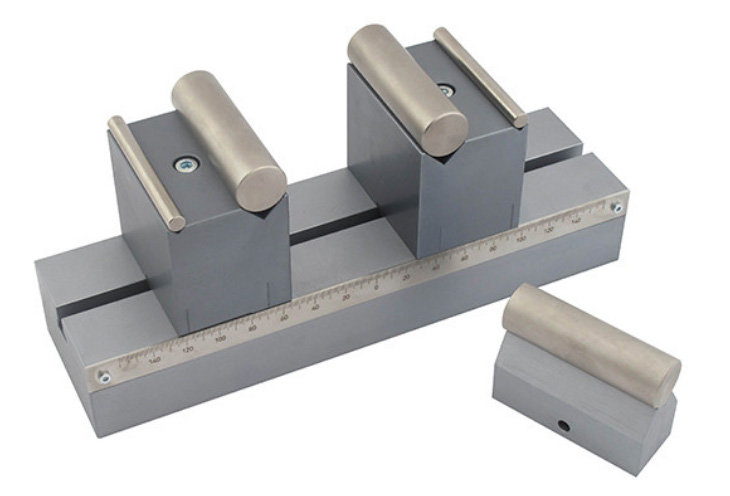
Hardware Solution: MTO mandates a high-stiffness, fatigue-rated universal testing frame configured with specialized ASTM E399 Clevis and Pin Fixtures (G-ASTM-E399) featuring a flat-bottom hole layout to permit free specimen rotation. To completely eliminate driver play and pin-settling anomalies, strain tracking must bypass crosshead travel entirely. Technicians must mount a specialized, knife-edge contacting Crack Opening Displacement (COD) Gauge (E-ASTM-E399) directly into the machined starter notch of the specimen. The high-frequency Newton controller reads this CMOD channel continuously to drive the 5 percent secant offset calculation engine live.
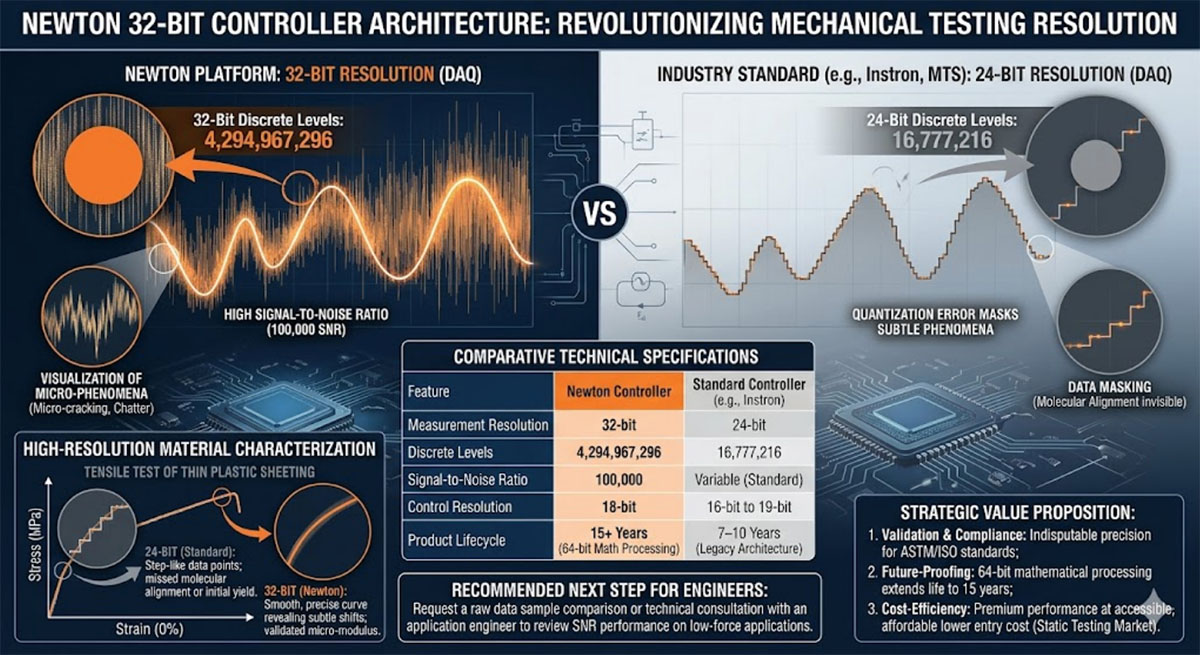
Processed via the Newton digital core yielding 4.29 billion discrete calculation levels (256x greater than legacy 24-bit processors) to trace smooth, continuous load-CMOD trajectories without digital stepping errors.
Provides an exceptional 100,000:1 Signal-to-Noise Ratio to filter out hydraulic pump harmonics, building rumbles, and electrical hums, keeping the high-gain COD circuit perfectly stable.
Commands a rapid 5 kHz data acquisition rate paired with high-density buffering to lock onto the precise microsecond of pop-in cracking or catastrophic cleavage fracture.
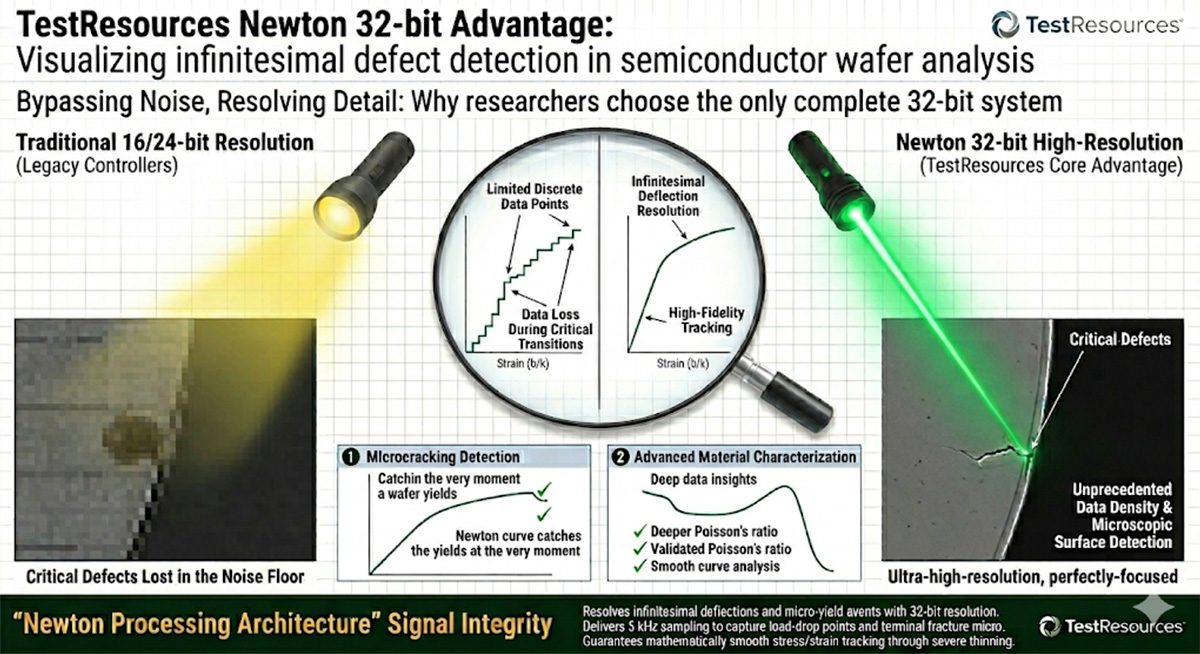
Event Detection: Employs real-time secant line intersection monitoring software that dynamically draws the 95 percent stiffness line over the primary load-CMOD slope to isolate the operational provisional load (Pq) automatically.
Calculations: Automatically executes multi-parameter validation geometry routines to check specimen thickness (B), crack length (a), and yield strength ratios, establishing if the provisional value (Kq) satisfies all linear-elastic constraints to be certified as a true KIc plane-strain fracture toughness value.
Statistical Output: Generates automated quality control analytics documenting multi-specimen batch statistics, ensuring rigorous traceability for aerospace, nuclear, and defense components.
| Load Frame: | TestResources 612-1000-630 Floorstanding UTM |
| Control Architecture: | Newton Characterization™ |
| Software Module: | N-ASTM-E399 (Supporting Precracking Control, Secant Line Intersection, and KIc Validity Protocols) |
| Grips/Fixtures: | G-ASTM-E399 (Compact Tension Clevis Fixture or 3-Point SENB Bend Rig) |
| Strain Measurement: | E-ASTM-E399 (High-Resolution Crack Opening Displacement [COD] Clip Gauge conforming to ASTM E399) |