An extended-width floorstanding dual-column frame delivering a 5 kN capacity and 900 mm clearance width. Wide-post crosshead distributions incorporate secondary alignment stabilizers to balance cross-axis loads uniformly across a flat horizontal plane.
Frame Capacity5 kN
Frame StyleFloorstanding
Frame TypeWide Dual Column
Newton TierCharacterization
Advanced Material Characterization & Real-Time Data Integrity
The Newton Characterization Platform is designed for research laboratories, advanced quality assurance environments, and materials development teams that need deeper insight into material performance than traditional break testing can provide. Delivering highly accurate, real-time analysis of material behavior under load, it enables precise determination of yield points, elastic modulus, and other critical mechanical properties. Whether evaluating high-modulus composites, advanced polymers, or biomedical materials, Newton Characterization provides the sensitivity, computational power, and data integrity required to identify subtle material transitions and unlock a more complete understanding of material performance.
Wide-Frame Assemblies: Wide dual-column (900 mm clearance) for testing full-width panels, car seats, or oversized enclosures.
Expert Commentary
Wide-post crosshead distributions incorporate secondary alignment stabilizers to balance cross-axis loads across a flat horizontal plane.
Pro Tip
WIDE TENSION BALANCE: When pulling components across a 900 mm wide horizontal window, position center lines exactly on the crosshead axis to prevent guide block binding.

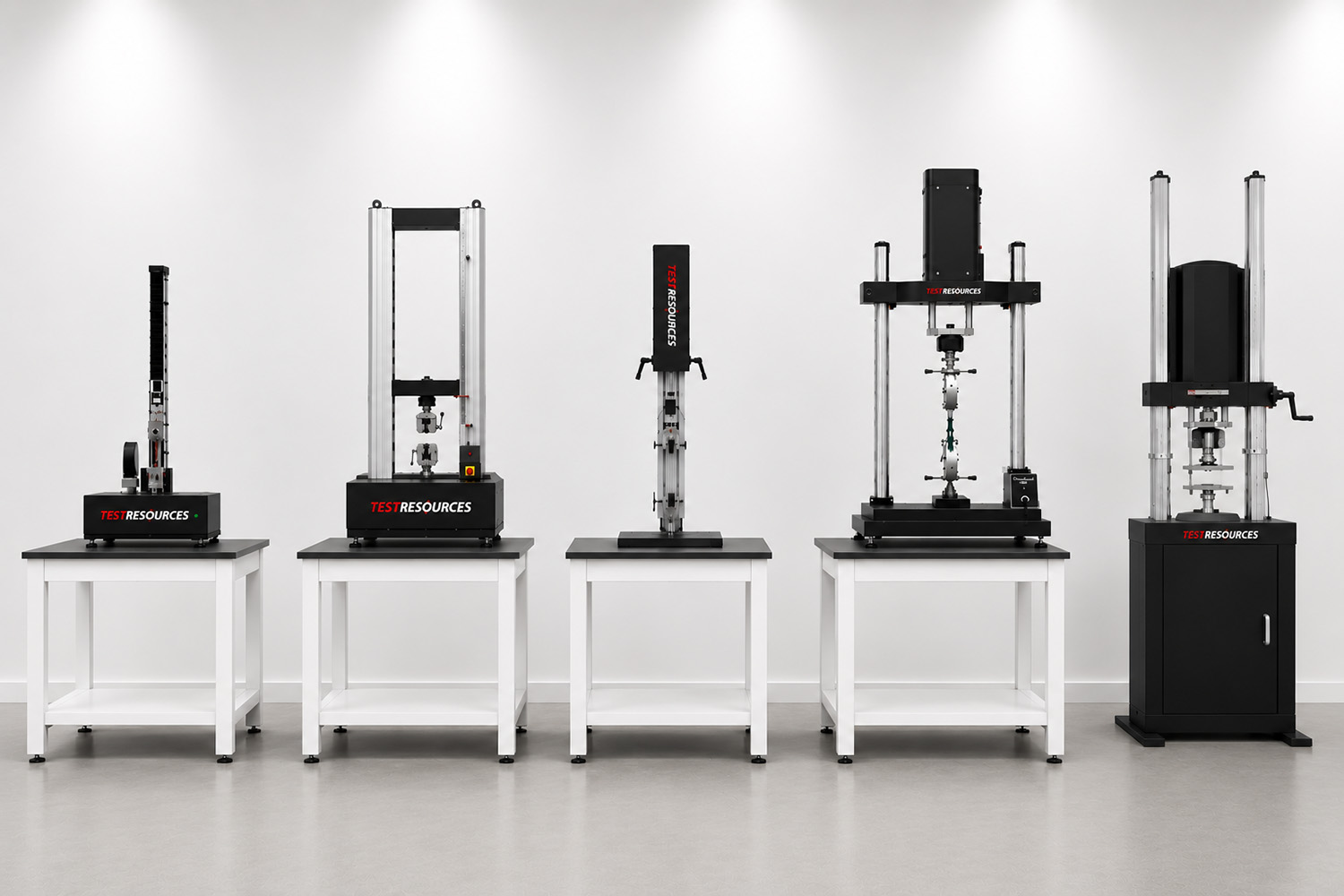
Applications & Expert Insights
Expert Nugget
Wide-Frame Assemblies: Wide dual-column (900 mm clearance) for testing full-width panels, car seats, or oversized enclosures.
Expert Commentary
Wide-post crosshead distributions incorporate secondary alignment stabilizers to balance cross-axis loads across a flat horizontal plane.
Pro Tip
WIDE TENSION BALANCE: When pulling components across a 900 mm wide horizontal window, position center lines exactly on the crosshead axis to prevent guide block binding.